


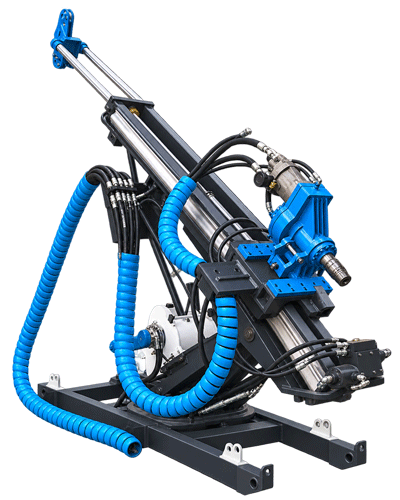
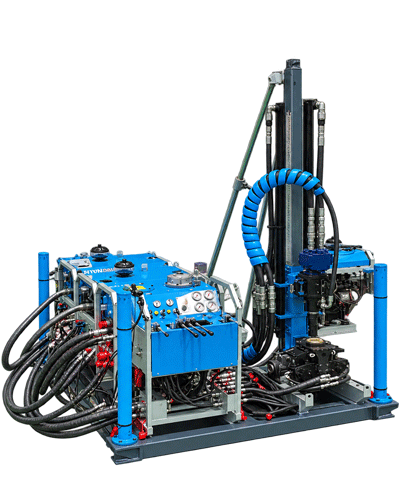
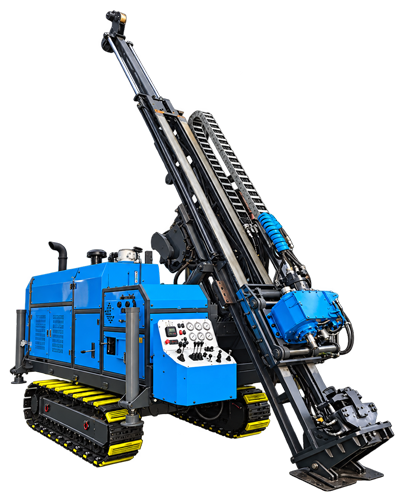
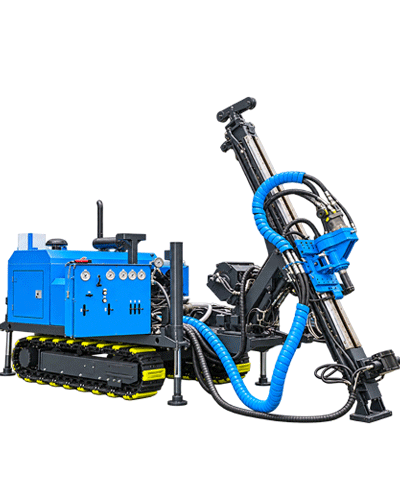
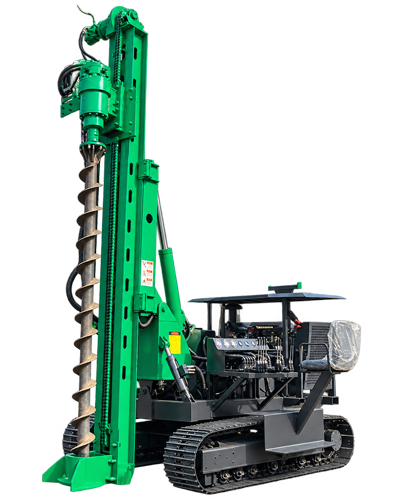
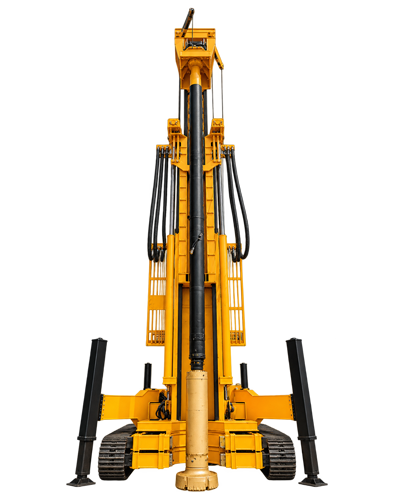
The PV390 materials state it fairly clearly: drilling depth 0–6 m, hole diameter 80–600 mm, and the purpose is photovoltaic support foundation pre-drilling. Reading these items together already draws the boundary between it and water well drilling rigs. What is truly prone to problems is not the boundary itself, but several ways of reading around it—treating photovoltaic pre-drilling as small-scale water well construction, treating the maximum drilling depth as the expected depth for every hole, treating the torque value as a pass to all formations, or treating the climbing angle as a basis for safe walking. The following explains each item according to the content given in the materials.
First Look at the Purpose: Photovoltaic Foundation Pre-Drilling and Water Well Construction Are Not the Same Type of Project
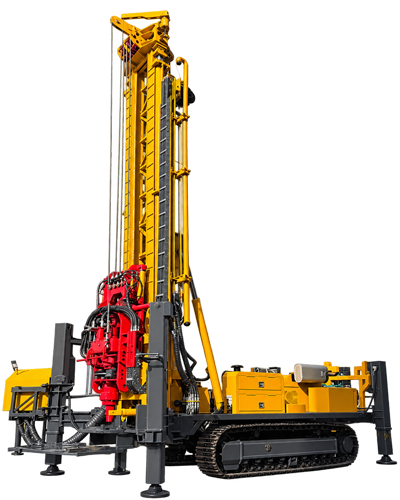
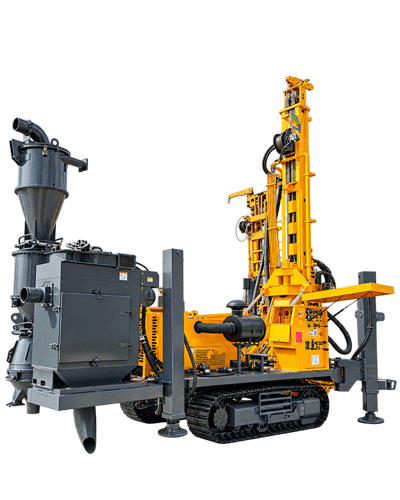
The materials position the PV390 as a crawler hydraulic photovoltaic pile driver for ground-mounted photovoltaic power stations, mountainous photovoltaic sites, and engineering foundation pre-drilling. It is mainly used for photovoltaic support foundation pre-drilling, hole forming, and pile foundation construction with corresponding attachments. It does not include well completion, pipe lowering, well washing, or other water well procedures within its scope of use.
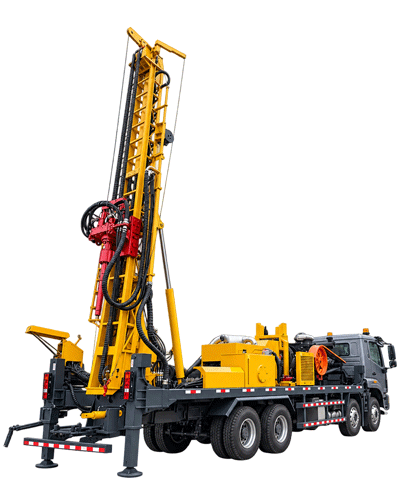
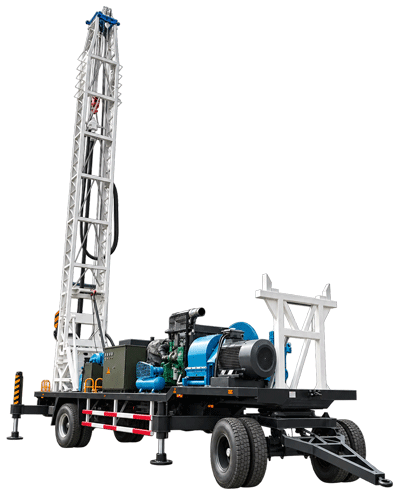
This is not a difference in name, but a difference in the combination of parameters. PV390's drilling depth is 0–6 m, and its hole diameter is 80–600 mm. Water well projects usually care about aquifer location, well completion depth, well diameter, and pipe lowering techniques. These conditions do not have corresponding explanations in the PV390 materials. Therefore, using PV390 for water well tasks lacks verifiable parameter support.
Among the Six Misreadings, Which Appear Most Often
Misreading 1: A drilling depth of 0–6 m means every hole must be drilled to 6 meters
0–6 m is the drilling depth range marked for the equipment, not a construction target value. The actual depth of photovoltaic support foundations, fence posts, and other shallow foundation projects is determined by the project design drawings, and conventional projects may not necessarily use 6 m. The upper limit of equipment capability and the project design depth are two different things.
Misreading 2: A hole diameter of 80–600 mm is just an optional range
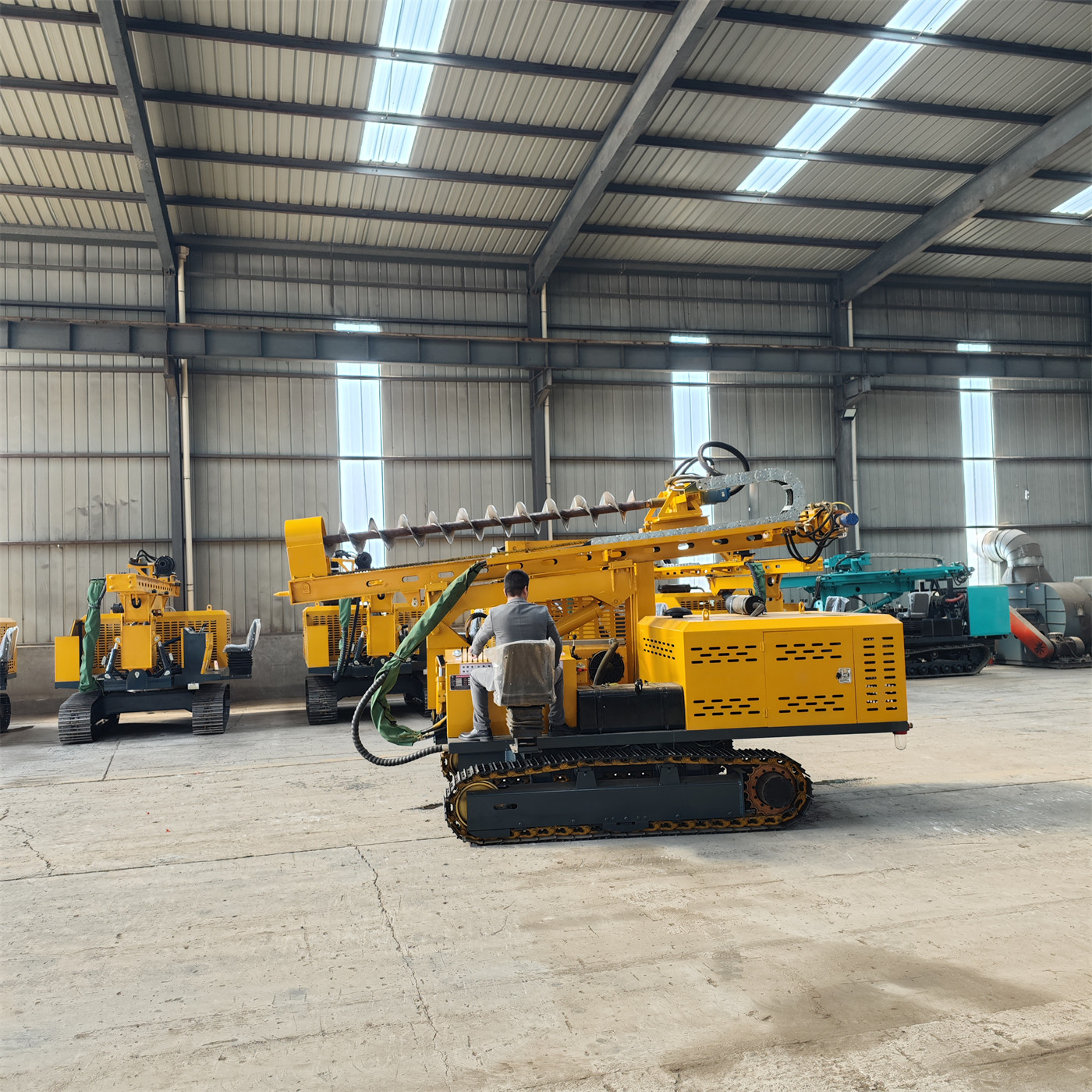
The materials state that 80–600 mm can be used to adapt to different pile types, guide holes, and foundation hole requirements: smaller diameters are suitable for pre-drilling conventional pile positions, while larger diameters are suitable for construction requiring larger foundation holes. However, the final hole diameter must be based on the project design drawings and foundation form; it cannot be directly adopted simply because the equipment can cover it.
Misreading 3: 13000 N·m torque can cover more formations
The PV390 reducer torque is 13000 N·m, the drill pipe speed is 90 r/min, and chain pressurization is used. The materials' statement on torque is: for large hole diameters, dense soil layers, and formations mixed with crushed stone, higher torque helps maintain rotation; but actual penetration still depends on the drill bit type, formation structure, and advancement control. In other words, torque is not an independent determining factor; the downward speed of chain pressurization also affects the result.
Misreading 4: A 35° climbing angle equals a slope that can be walked safely
The materials mark a climbing angle of 35°, while clearly warning: actual slope construction should still comprehensively consider cross slope, ground wetness and slipperiness, soil quality, and the center of gravity of the whole machine, and the maximum climbing angle should not be used alone as a basis for safe walking. Photovoltaic sites commonly have dirt roads, grassland, and crushed stone ground, and there is still a gap between the actual adhesion conditions of these sites and the nominal value.
Misreading 5: After replacing with impact drilling tools, it can be used in rock layers, which equals being able to undertake hard rock water well drilling
The original text of the materials is: after replacing with impact drilling tools, it can be used for strongly weathered rock and rock layer construction, and it also states that matching drilling tools should be selected according to rock hardness, integrity, and target hole diameter. The materials do not give the impact hammer model or impact energy, so no additional promise is made regarding specific hard rock efficiency. This part of the capability can only be understood according to the existing statements in the materials.
Misreading 6: The crawler chassis and posture adjustment can solve all site problems
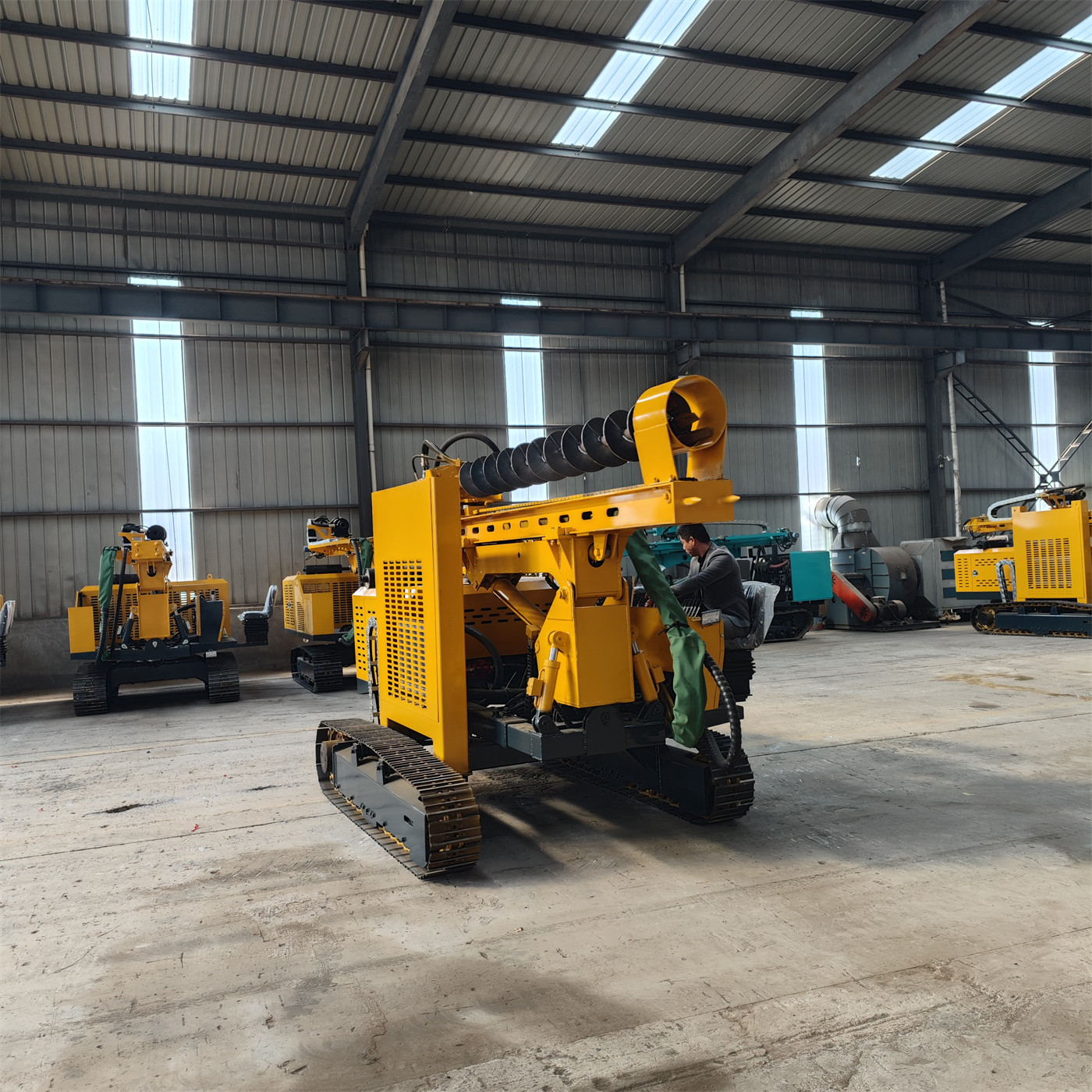
The PV390 has 120° mast pitch, dual-cylinder left and right swing arms, and 50 cm front and rear telescopic compensation. These are adjustment capabilities for drilling posture and hole alignment position, not the ability to build roads or level sites. Whether the equipment can reach the position and whether it can stop stably still depends on the access road and the site conditions around the pile position.
Parameter Boundary Quick Reference
| Item | Material Value | Constraint in Use |
|---|---|---|
| Drilling depth | 0–6 m | Positioned for photovoltaic pile foundations and shallow foundation projects, not deep water well construction |
| Drilling diameter | 80–600 mm | Subject to project design drawings and foundation form |
| Reducer torque | 13000 N·m | Penetration also depends on drill bit type, formation structure, and advancement control |
| Drill pipe speed | 90 r/min | Used in conjunction with chain pressurization |
| Mast pitch | 120° | Used for drilling posture adjustment on slopes |
| Front and rear telescopic compensation | 50 cm | Longitudinal fine adjustment of pile position |
| Climbing angle | 35° | Needs comprehensive consideration of cross slope, humidity, soil quality, and center of gravity; not to be used as a basis for safe walking |
Reading the Materials by Formation: What It Can Do and What to Note
The materials give classified descriptions of applicable geology, but for each category, the notes are more worth reading than "suitable or not":
- Soil layer: suitable for conventional photovoltaic foundation pre-drilling and pile position construction.
- Loess: adjust drilling parameters according to density and moisture content.
- Clay: pay attention to drill bit mud balling and cuttings removal.
- Cobblestone sand: select drilling tools according to particle size and density; hole wall condition and rotation load need on-site judgment.
- Backfilled garbage layer: focus on preventing foreign objects, voids, and local jamming.
- Strongly weathered rock and rock layers: after replacing with impact drilling tools, it can be used for construction in corresponding formations.
The materials also include a note on advancement control: when encountering cobblestones, backfill layers, or strongly weathered rock, advancement should be controlled according to rotation load and drilling tool status to avoid excessive downward pressure causing hole deviation, drill jamming, or excessive impact on drilling tools; when abnormal impact or a sudden increase in rotation load occurs, the drill should be lifted promptly for inspection.
The Power and Chassis Section Retains Only Information Within the Materials
The PV390 is equipped with an 85 kW Yuchai four-cylinder engine, uses triple pumps 40 / 40 / 32, travel motor TM09, overall dimensions 5200 × 2300 × 2650 mm, track shoe width 400 mm, and a crawler chassis. The materials' explanation of the 400 mm track shoes is that they help distribute ground pressure and improve adhesion on dirt roads, grassland, crushed stone ground, and slopes; the explanation of diesel power is that it is more suitable for independent field construction, and during continuous high-load operation, cooling, the air filter, and the fuel system should be checked with emphasis.
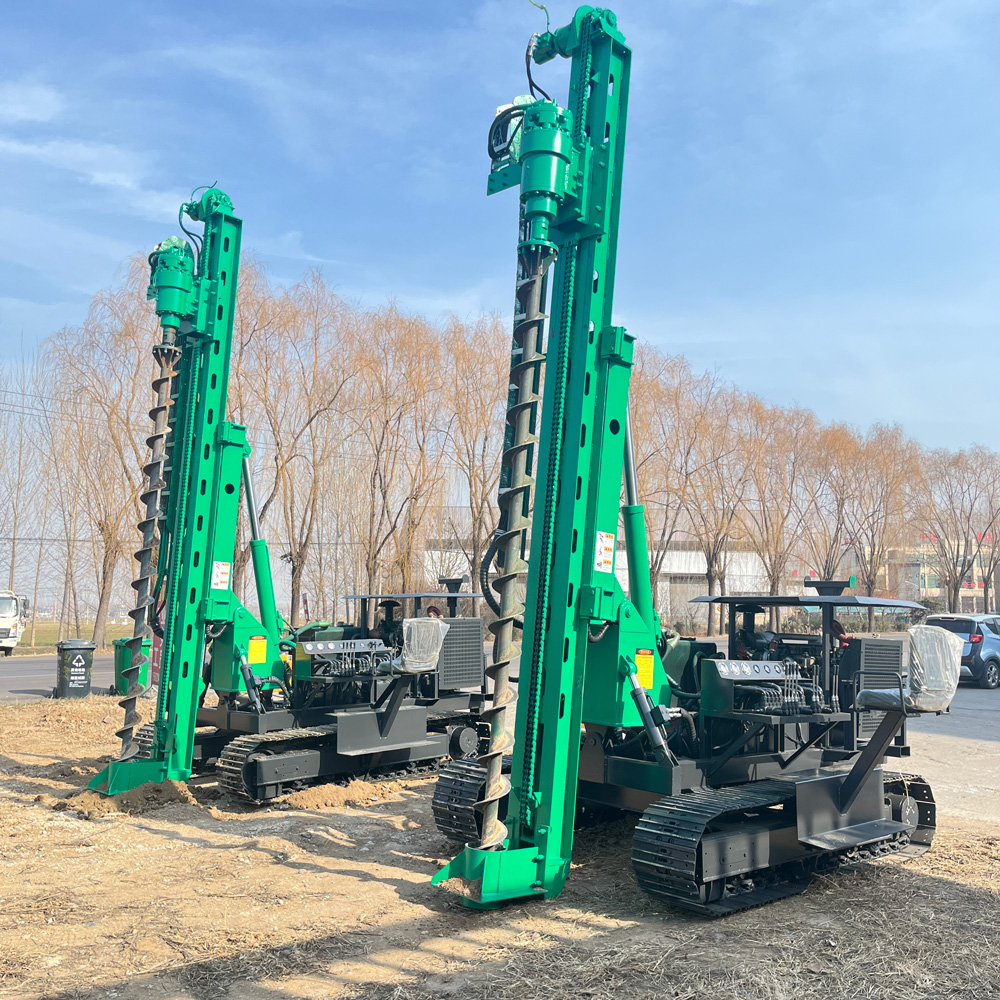
The materials also mention a model note: the product model in the original materials was SL390, which has been confirmed as PV390. This article uniformly uses PV390, and the remaining technical parameters are organized according to the provided materials.
Parts That Need to Be Confirmed On Site or in Design Documents
The following items do not have conclusions in the existing materials and can only be verified at the project level: actual drilling efficiency and hole-forming quality need to be combined with geological conditions, drilling tool form, pile type, hole diameter, construction angle, and operation method; the suitable hole diameter value must be based on the foundation design drawings; the specific model and impact energy of the impact drilling tools are not given in the materials; the safe conditions for slope walking need to be comprehensively judged in combination with actual cross slope, ground wetness and slipperiness, soil quality, and the center of gravity of the whole machine.
After distinguishing these items clearly, PV390's boundary will not be led astray by a single value: it is a crawler hydraulic device for photovoltaic foundation pre-drilling, and its drilling depth, hole diameter, and geological adaptability are all written within the scope of its own materials. Tasks beyond this scope need to find another basis.